International Risk Governance Council Improving Governance of Systemic Risks


publications


Welcome to IRGC Website

IRGC is an independent organisation whose purpose is to help the understanding and management of global risks that impact on human health and safety, the environment, the economy and society at large by:

- developing concepts of risk governance that have relevance across different risk types, problem areas, organisations and countries

- anticipating major risk issues and improving the understanding and assessment of them and the ambiguities involved;

- providing policy recommendations to key decision makers in government.

In achieving its mission IRGC will seek to work with governments, industry, NGOs and other organisations.

Read more about us


Access to the Private Area


New Article in the Journal of Risk Research

The article ‘Interpreting Risk in International Trade’ uses IRGC’s concept of Risk Governance Deficits applied to a case study on biosecurity risk analysis. The case study also examines the role of science and uncertainty in resolving trade disputes at the WTO. The article is available online here.

Risk Governance by Governments

The 21st century has so far witnessed a host of large-scale disasters across the world including earthquakes, tsunamis, human and animal diseases, terrorist attacks, cyber attacks and major disruptions to critical infrastructures. Risk management must be central to a government’s planning as preparation, response, recovery and rehabilitation for disasters become increasingly necessary. IRGC’s views on how governments could consider the governance of disaster risks are presented in an article published in the Commonwealth Finance Ministers Reference Report 2011. Click here for a copy of the article

Energy Efficiency Policies and the Rebound Effect

Preliminary report from an IRGC initiative to facilitate research on Energy Efficiency Policies and the Rebound Effect.

Read more…

IRGC 2011 Annual Event on Risk Governance: Roundtable discussions

As part of its Annual Event on 3 November 2011, IRGC convened a selected number of experts and practitioners for two parallel roundtable discussions hosted at the École Polytechnique Fédérale de Lausanne (EPFL):

- Roundtable 1: The anticipation of and early response to emerging risks and;
- Roundtable 2: How to provide more consistent science and technology advice in support of risk governance and sustainable innovation.

Read more…

Public conference

On 3 November 2011, IRGC held a public conference, co-organised with the École Polytechnique Fédérale de Lausanne (EPFL).

The conference was on the topic of improving risk governance of industrial activities. Following key note presentations, a panel of experts and practitioners discussed how we have learned from and built better risk governance institutions and processes in the wake of past disasters, including the lessons that can be learned from the recent March 2011 Fukushima Dai-Ichi accident in Japan. Read more...

Slow moving risks with potentially catastrophic outcomes

IRGC is currently exploring how to deal with risks that evolve slowly in a context of complex systems and that may have potentially catastrophic consequences. Their slow evolution makes changes less perceptible, leading to their going unnoticed or – in the case that they are identified – being ignored because the change seems too small or gradual to warrant concern. Read more...

Emerging Risks: Call for contributions

We are looking for examples of how organisations have successfully anticipated or dealt with emerging risks.

For more information: Visit the project page


"Improving the Management of Emerging Risks" Concept Note

Download the Concept Note [PDF]

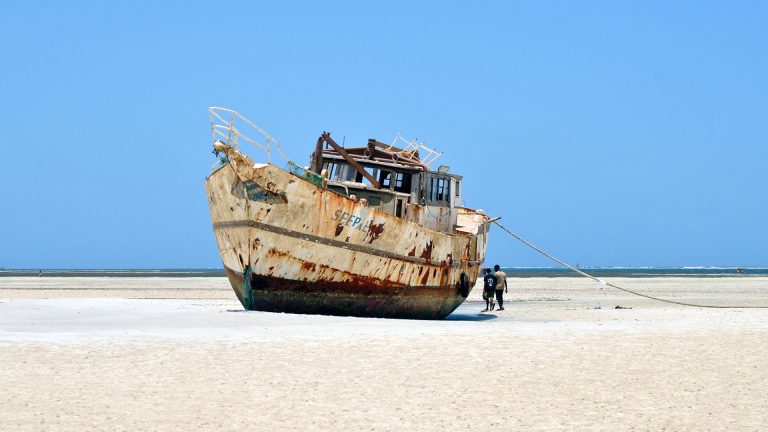
"Risk Governance of Maritime Global Critical Infrastructure" Report

Download the Report [PDF]

Get more information
"The Emergence of Risks: Contributing Factors" Report

Download the Report [PDF]
Order a paper copy
Visit the project page

Get more information
Guidelines for the Appropriate Risk Governance of Synthetic Biology." Policy Brief

Download the Policy Brief [PDF]
Order a paper copy
Visit the project page